December Isn’t Universal: The Teaching Truth No One Tells You

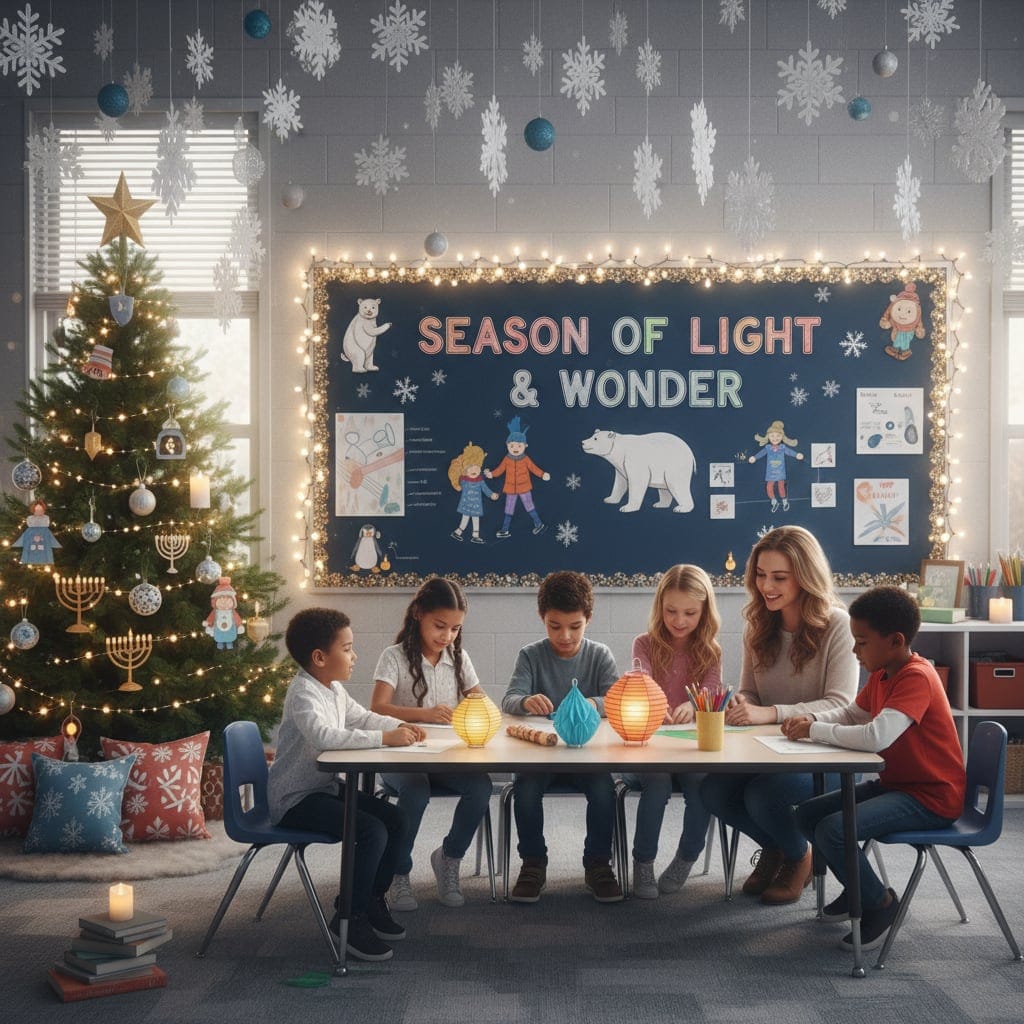
The holiday season can feel magical inside a classroom; twinkling lights, themed activities, and excited student energy. But as a new teacher, it’s important to remember something essential: not all students celebrate Christmas, and the way you navigate this reality communicates a lot about belonging, respect, and safety in your classroom.If this is your first year teaching, here’s what you need to know to make this time of year inclusive, affirming, and joyful for every student.
1. Holiday “Norms” Aren’t Universal
You may have grown up with Christmas traditions, but many students do not—whether because of their religion, culture, family beliefs, or simply personal preference.
When you assume everyone celebrates Christmas, it sends an unintended message: This is the “normal,” and anything else is “other.”
A better approach?
Stay curious. Stay open. Let students define their own experiences.
A simple, neutral question like, “What does December look like for your family?” opens the door for many kinds of stories—not just the dominant one.
2. Participation Should Always Be Optional, Not Awkward
Classrooms are full of subtle pressures: glittery crafts, themed read-alouds, parties, pajama days, gift exchanges. Students who don’t celebrate Christmas often try to blend in to avoid standing out, especially in elementary grades.
As a new teacher, make this a guiding rule:
Opt-out should never feel like missing out.
Provide parallel options that feel equal and valued. If you decorate holiday cookies, offer winter-themed alternatives. If you host a class celebration, call it a Seasonal Celebration, End-of-Semester Celebration, or Winter Fun Day instead of a Christmas party. Small shifts make a huge impact.
3. Avoid Activities That Assume Christmas Knowledge
It’s easy to forget how often Christmas appears in lesson plans:
– “Write about your favorite Christmas memory.”
– “Draw your Christmas tree.”
– “Tell us what Santa is bringing.”
For some students, these are not just irrelevant prompts—they can be isolating.
Instead, try open-ended alternatives:
✔ “Write about a tradition your family enjoys.”
✔ “Draw something meaningful from winter in your life.”
✔ “Tell us something you look forward to this season.”
These keep rigor high and keep every student included.
4. Representation Matters, Especially Right Now
Students notice what you celebrate, what you highlight, and what you make space for. When only Christmas imagery appears on bulletin boards or in activities, students who celebrate Hanukkah, Kwanzaa, Diwali, Lunar New Year, or nothing at all may feel invisible.
As a first-year teacher, aim for a classroom message that says:
“Every culture belongs here. Every tradition is worthy of being seen.”
This doesn’t mean you must teach every holiday, it means acknowledging your students’ lives with respect and balance.
A single sentence can do that beautifully:
“We all experience winter differently, and that’s something to celebrate.”
5. Don’t Assume... Ask, Listen, and Follow the Family’s Lead
Families appreciate when teachers seek clarity rather than guessing.
A quick email or beginning-of-year survey question like “Are there any holidays your child does not participate in?” is not just helpful—it’s inclusive practice.
If you didn’t ask earlier, you still can.
A gentle message such as, “I want to ensure all students feel comfortable during our end-of-semester activities, are there any traditions or celebrations you’d like me to be aware of?” goes a long way.
It communicates care. It communicates professionalism.
And it communicates that no child will be put in an uncomfortable position.
6. Your Response Sets the Tone for Belonging
When a student says, “I don’t celebrate Christmas,” your reaction becomes part of their core memory of school.
New teachers sometimes freeze or over-explain. Instead, keep it warm and simple:
“Thank you for telling me. I want you to feel comfortable with everything we do, so we’ll make sure you have options that fit your family.”
Belonging doesn’t come from perfect plans, it comes from intentional reactions.
7. December Is a Test of Classroom Culture and an Opportunity
The holidays magnify how included or excluded students feel. As a new teacher, this season gives you a powerful chance to strengthen your classroom culture:
- Care about what students care about.
- Make space for quiet identities.
- Treat difference as normal, not exceptional.
- Build activities that every student can enjoy without compromising their beliefs.
When you do this well, your classroom becomes something more than festive. It becomes safe.
And that safety is a gift far more meaningful than anything wrapped in holiday paper.
Visionary Check:
Take 3 minutes today to review your upcoming December plans.
Ask yourself:
-Is every activity accessible to every student?
-Does any language assume a specific holiday?
-Have I created options that feel truly equitable?
A small shift now could mean everything to a child who often feels unseen.