The Difference Between Support and Surveillance

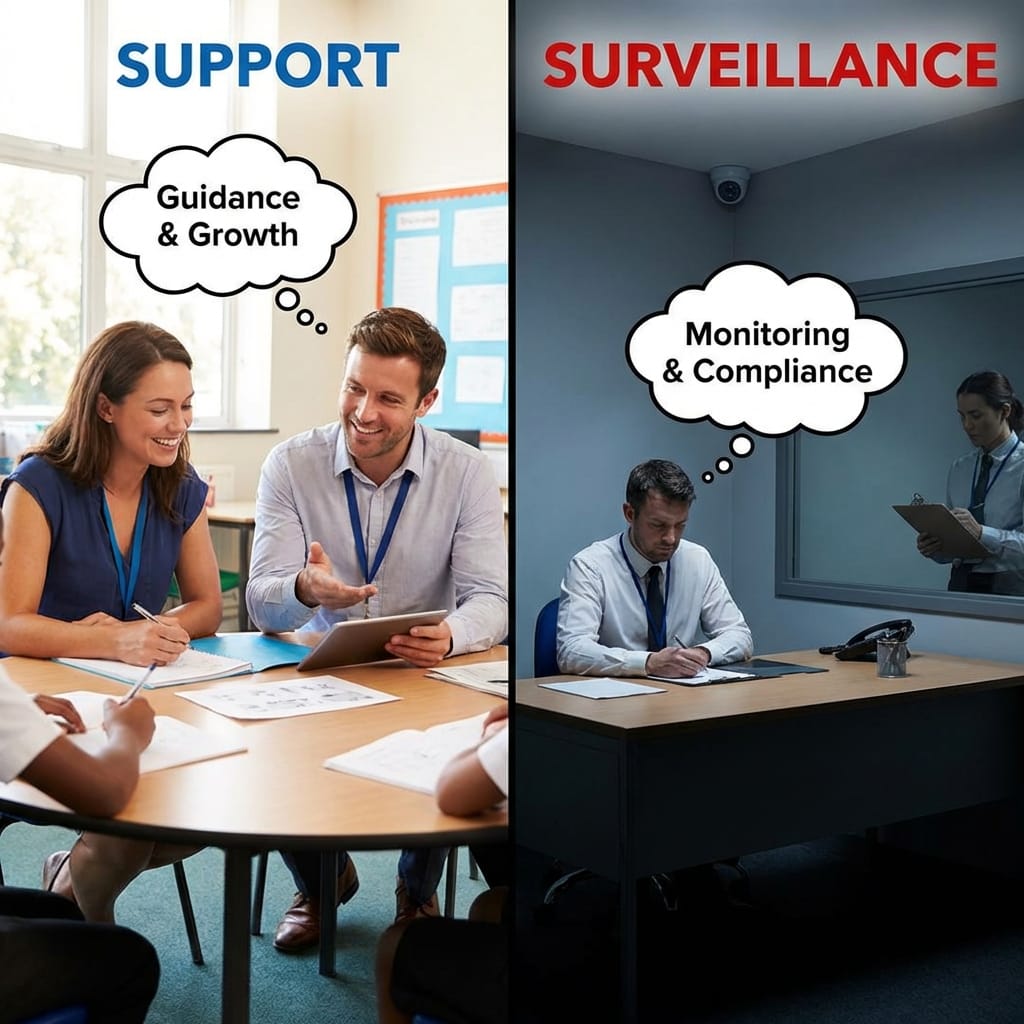
There’s a moment many teachers recognize but rarely name.
It’s when someone walks into your room, not to help, not to ask, not to listen... but to watch.
They smile. They nod. They scribble something down. They leave without a word.
Later, you’re told you’re being “supported.”
But it doesn’t feel like support.
It feels like surveillance.
Support and surveillance are not the same thing, even though schools often treat them as interchangeable.
Support is rooted in trust. Surveillance is rooted in control.
Support sounds like, “What do you need?”
Surveillance sounds like, “I was just checking in.”
Support invites conversation.
Surveillance collects evidence.
Support assumes competence and looks for growth.
Surveillance assumes risk and looks for compliance.
When teachers feel supported, they experiment. They ask questions. They take instructional risks. They reflect honestly on what’s working and what isn’t.
When teachers feel watched, they perform.
They choose safe lessons over meaningful ones.
They teach to the rubric instead of the students.
They prioritize appearances over practice.
Over time, surveillance doesn’t just erode trust, it reshapes behavior.
It teaches teachers that being “good” means being unremarkable.
That innovation is dangerous.
That curiosity is a liability.
And eventually, it teaches them to stop trying.
What makes this especially damaging is that surveillance often wears the language of support.
Feedback without follow-up.
Data without dialogue.
Presence without partnership.
None of that helps teachers grow.
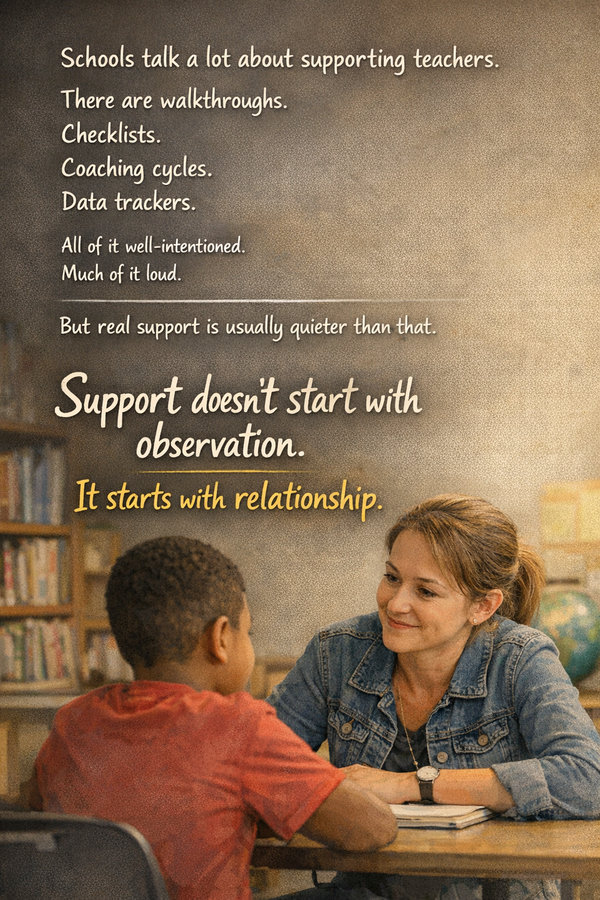
Real support is slower. Messier. More human.
It requires relationships.
It requires time.
It requires leaders who are willing to be vulnerable too... to admit they don’t have all the answers and are learning alongside their staff.
Support isn’t about catching mistakes.
It’s about building capacity.
If a system doesn’t trust its teachers, no amount of walkthroughs, trackers, or “support cycles” will fix that.
Because support begins with a simple belief:
Teachers want to do good work, and with the right conditions, they will.
So here’s the question worth asking:
Do you feel coached or monitored?
And if you’re in a position of leadership, another question matters just as much:
When you show up in classrooms, are you there to help teachers grow…
or to make sure they don’t step out of line?
The answer shapes everything that comes after.