What Real Support Actually Looks Like

Schools talk a lot about supporting teachers.
There are walkthroughs. Checklists. Coaching cycles. Data trackers.
All of it well-intentioned. Much of it loud.
But real support is usually quieter than that.
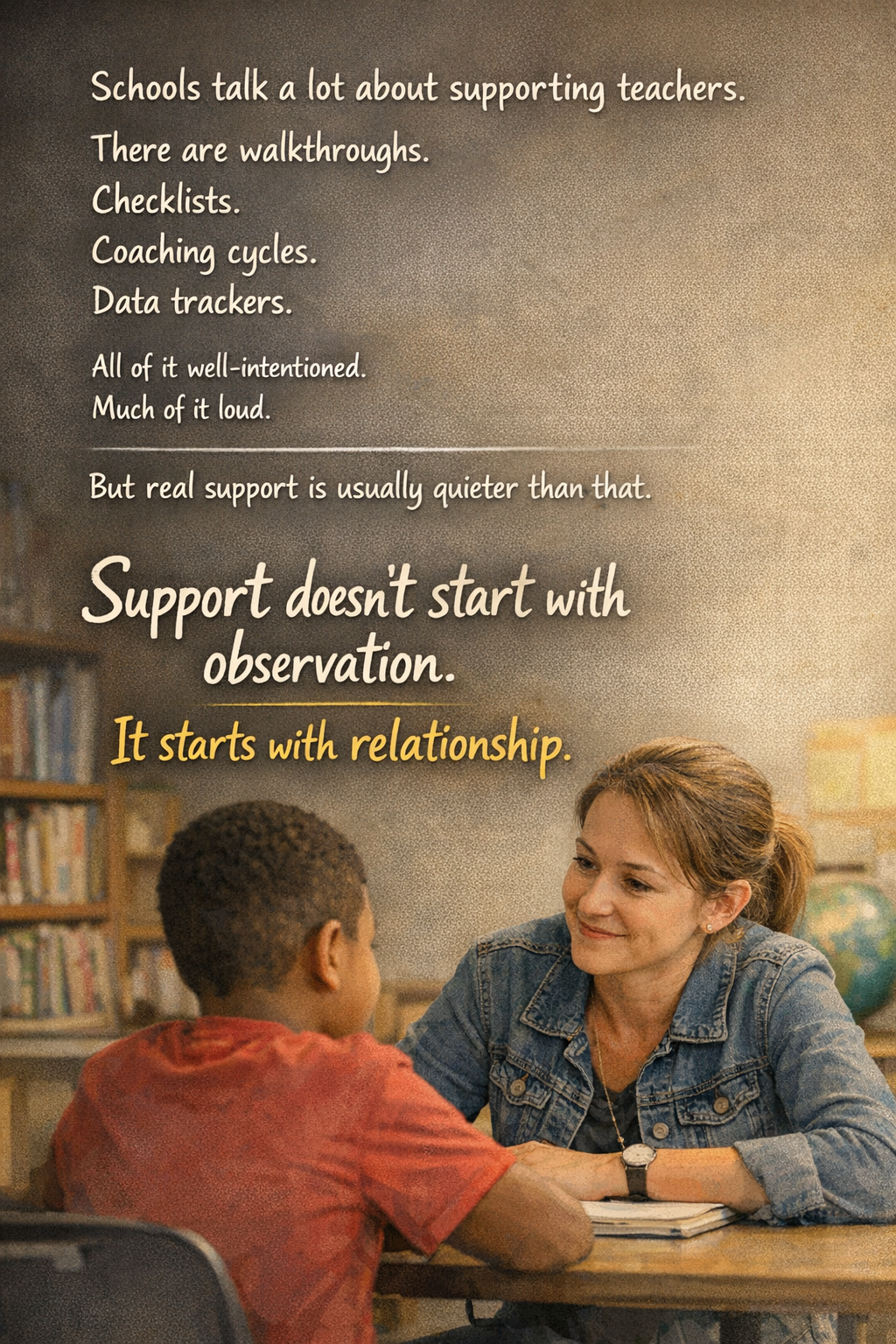
Support doesn’t start with observation. It starts with relationship.
Support isn’t something you drop in for once a month.
It’s something you build over time.
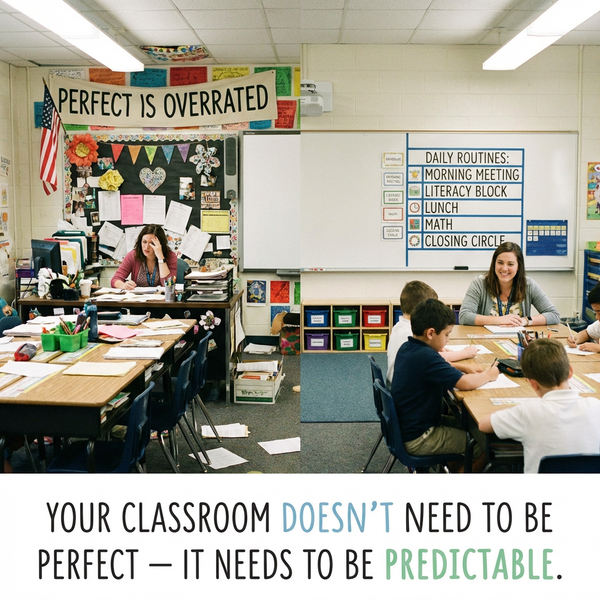
When support is real, it feels predictable instead of performative.
It feels relational instead of transactional.
It feels ongoing instead of episodic.
Real support shows up before something goes wrong.
It looks like asking questions before giving advice.
It looks like listening without immediately fixing.
It looks like following up... not to check a box, but because the work mattered enough to return to it.
Real support protects teacher time.
It shields them from unnecessary noise.
It helps carry the invisible weight that teaching often demands.
Support that comes with strings isn’t support.
It doesn’t feel like help that will be referenced later.
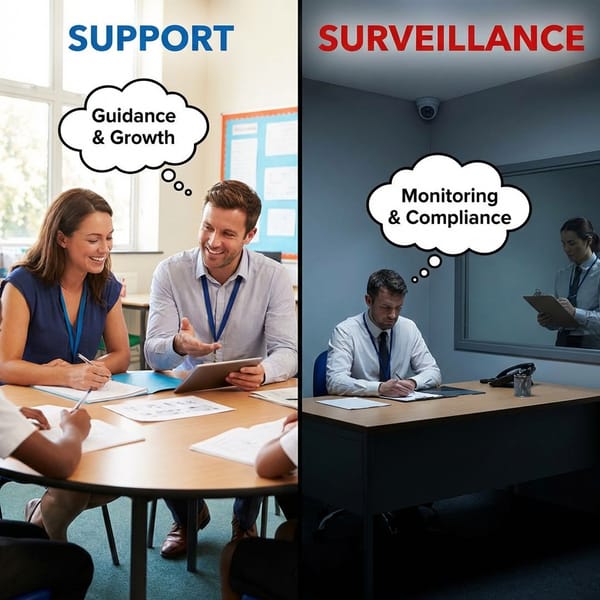
It doesn’t feel like kindness with a clipboard.
It doesn’t leave teachers wondering what was written down after the conversation ended.
Kindness with a clipboard still feels like surveillance.
Support feels like someone is with you, not evaluating you.
That kind of support requires courage, especially from leaders.
It requires trusting professional judgment.
It requires letting go of control.
It requires being okay with growth that isn’t always immediately measurable.
The most supportive leaders aren’t the most visible — they’re the most trusted.
They create spaces where teachers feel safe enough to say,
“I’m not sure this is working,”
without worrying that uncertainty will be held against them.
Because when teachers feel supported, they take risks.
They reflect honestly.
They grow.
Support doesn’t make the work easier — it makes it lighter.
So here’s the question worth sitting with:
When was the last time support actually made your work feel lighter?
And if you’re in a position to offer support, another question matters just as much:
Are you building relationships or just systems?
The difference shows up everywhere.